
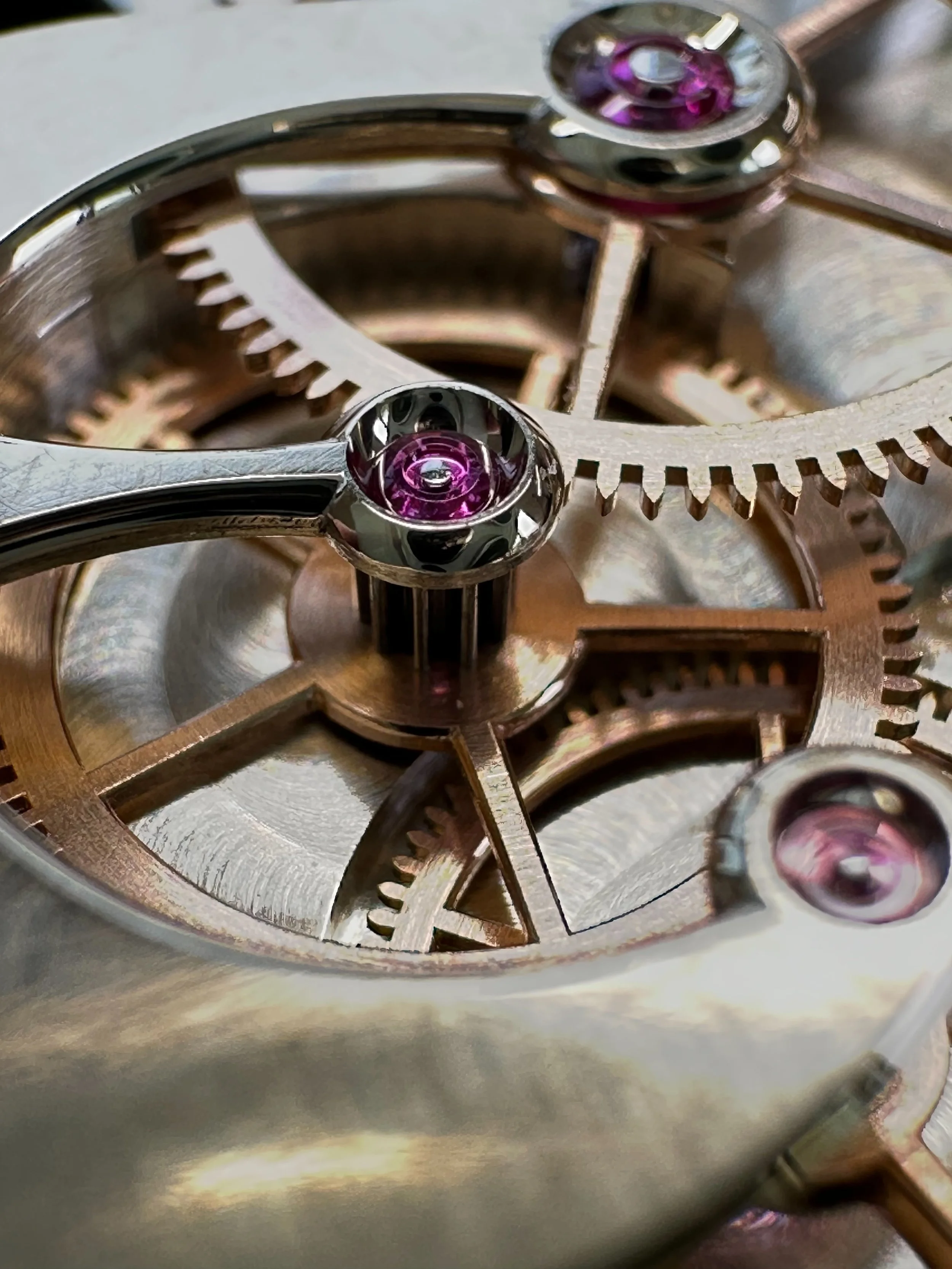
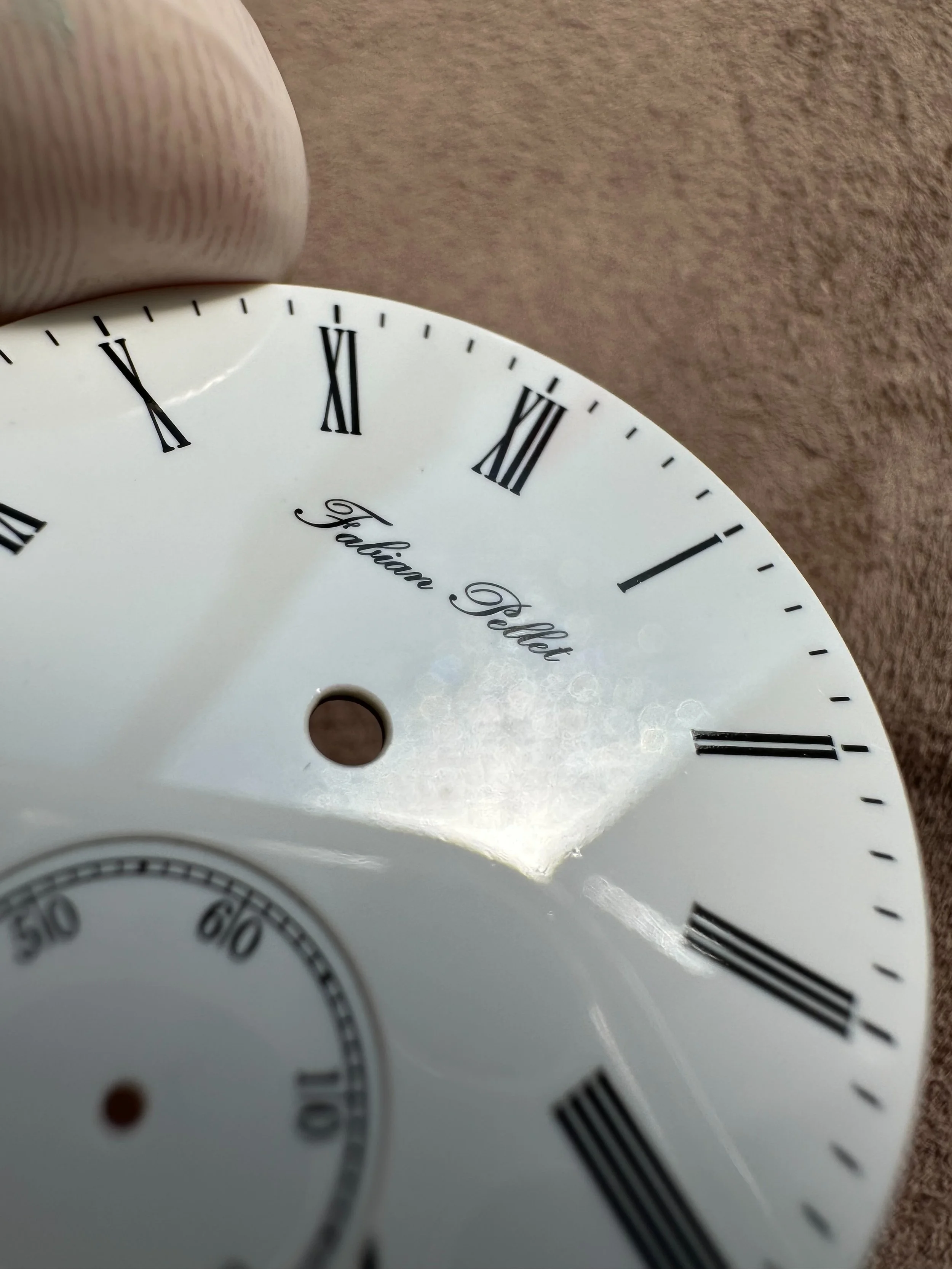
My specifications:
Starting from scratch, I calculated, sized, and positioned each component
Crucial blank components are machined on high-precision equipment, ensuring absolute mechanical exactness. Following this, every single component receives entirely handcrafted finishing and decoration
The finishes and decorations are handcrafted on each component, meeting the most demanding criteria of traditional Haute Horlogerie
Grand Feu enamel dial, handcrafted using an ancestral technique, giving the piece unparalleled depth and durability
Indications: hours, minutes in the center, small seconds at 6 o'clock
The mainplate features thicker proportions to ensure the rigidity of the movement
Original, simple bridge design, revealing the gear train and the mainplate
Flat gear roots across the entire gear train, an architectural detail paying homage to the great achievements of ancient watchmaking
Movement diameter custom-designed for the case dimensions.
Controlled height for a watch that's comfortable to wear every day
Integration and concealment of the casing screws, resulting in a sleek caseback aesthetic
Frequency 18,000 vph (2.5 Hz) - Traditional beat rate
Streamlined time-setting mechanism: no constantly rotating parasitic gears, ensuring reliability and longevity
Offset winding mechanism on the dial side, allowing for a cleaner bridge architecture and highlighting the movement's finishes
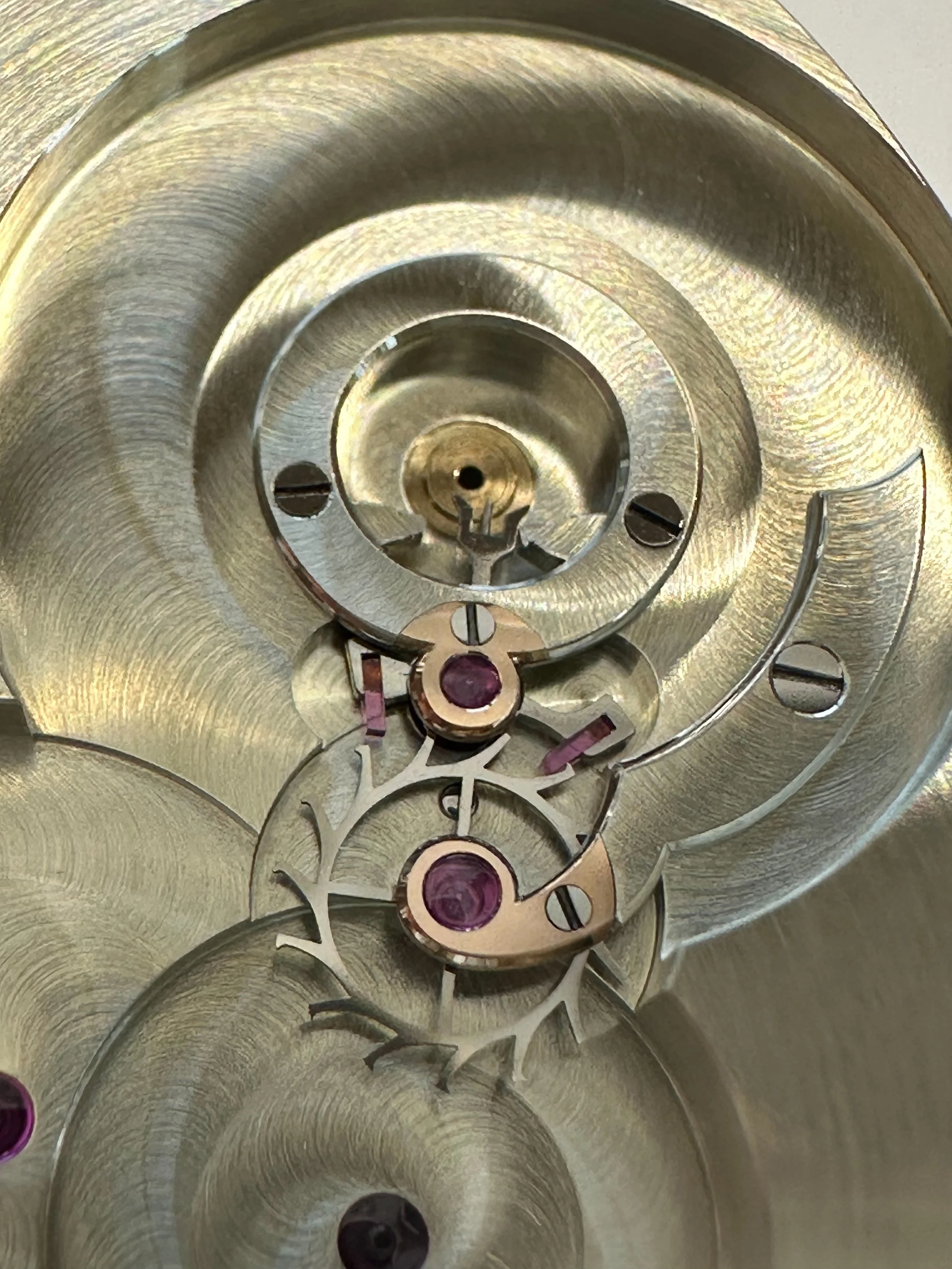
Decorations
Just like the other stages of manufacturing, the decoration of each component has received special attention. These finishing operations account for a third of the component manufacturing time.
Polished angles, Geneva stripes, sunray or black polish, each surface is decorated by hand.

From idea to realization
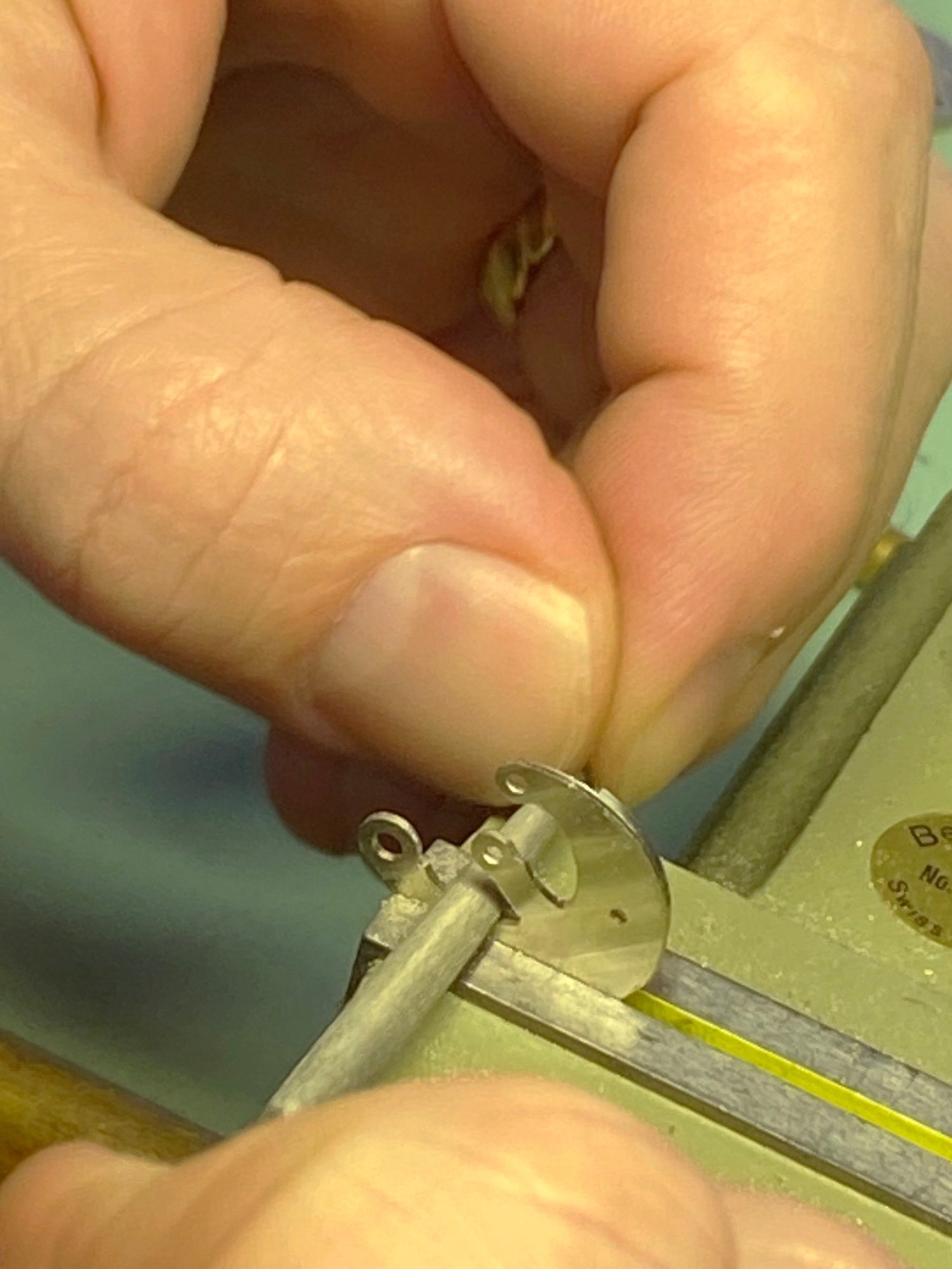
Restoring antique watches has been an important source of learning for me, immersing myself in the manufacturing techniques of watch components and enriching my knowledge of horological history.
Becoming a watchmaking teacher gave me the opportunity to deepen my theoretical knowledge, thus complementing my practical experience.
Going from a sketch to a finished watch component is a satisfaction I never tire of. Gradually, the desire to create mechanisms, and eventually to design a watch movement according to my own criteria, became apparent.
The first stage of this project was carried out empirically, mainly using antique tools to test my ability to manufacture the components. The challenge now is to improve the quality, reliability, and robustness of the mechanisms. To achieve the level of quality and precision I want to offer, I naturally turned to state-of-the-art tools and contemporary manufacturing methods for the rigorous production of critical components, while ensuring a finish that is entirely handmade.
Although I am passionate about complicated watchmaking, I wanted this first movement to be simple. This apparent simplicity is actually the greatest challenge. It is the result of rigorous engineering aimed at uncompromising reliability, a guarantee of quality and durability that is essential before adding any mechanism.
I am looking forward to moving on to the next step.
I'd like to express my gratitude to everyone who helped me along the way. Whether it was advice, an opinion or simply for believing with me
THANK YOU!